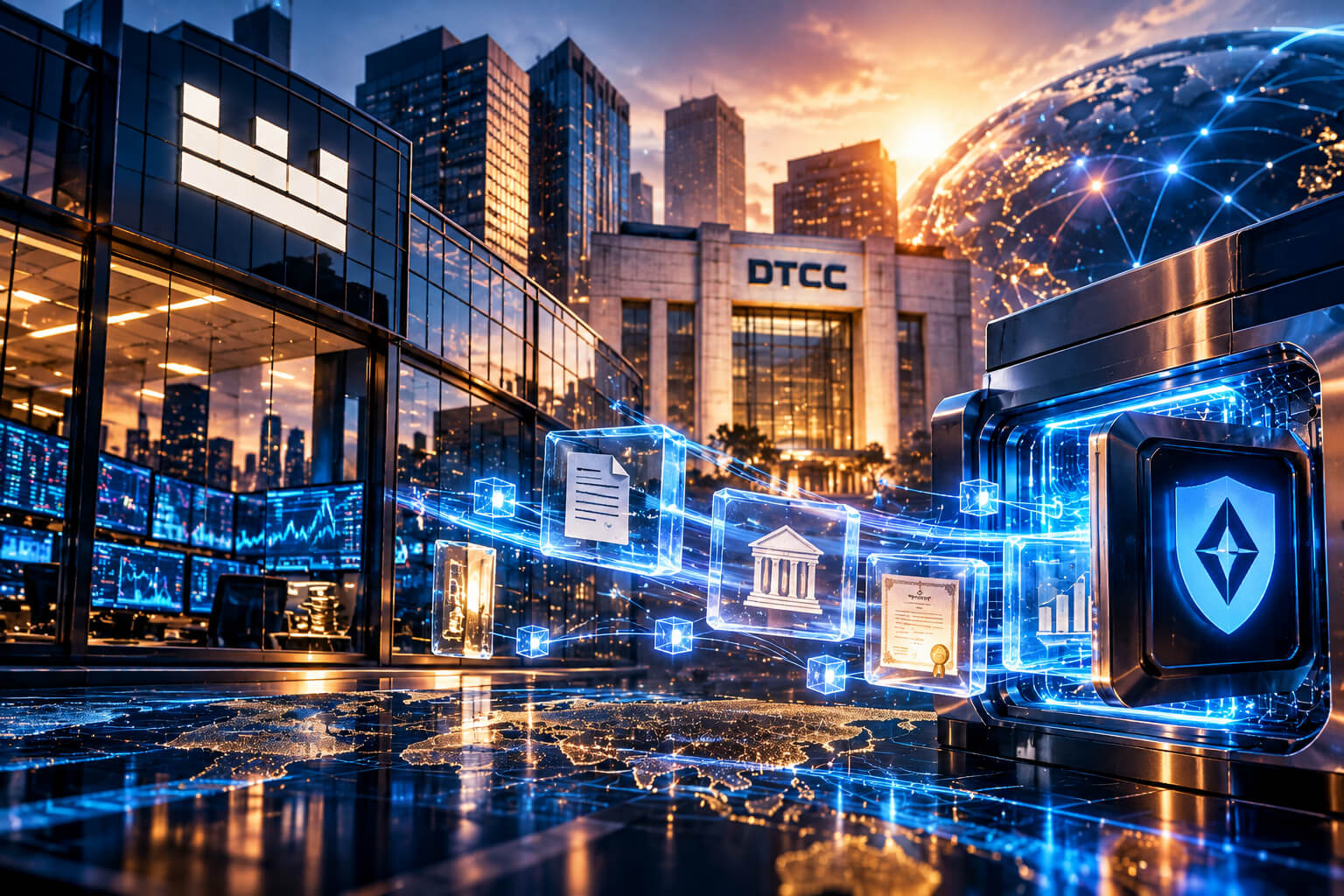
Citadel Securities has put tokenized U.S. Treasury securities through a live production workflow using Fireblocks infrastructure and The Depository Trust & Clearing Corporation’s upcoming tokenization service.
The transaction took place on July 15, 2026, as part of a wider DTCC production initiative designed to test how securities already held within traditional market infrastructure can move into blockchain-based workflows. Citadel Securities created a tokenized representation of U.S. Treasuries on the Canton Network, transferred the securities between registered wallets and ultimately posted them to CME as collateral.
That is a more practical test than simply issuing an asset on a blockchain. It puts tokenization into the machinery of institutional trading, where collateral, custody, controls and settlement all have to work together.
Citadel Securities Moves U.S. Treasuries Onchain
During the July production event, Citadel Securities used the DTCC Tokenization Service to create a tokenized representation of U.S. Treasuries on the Canton Network.
According to Fireblocks, the tokenized securities entitlement was held in a Fireblocks wallet before being transferred to counterparties using DTC-registered wallets, including wallets registered to BNP Paribas and Société Générale. The assets were subsequently posted to CME as collateral to support trading activity.
The underlying idea is straightforward: make high-quality traditional assets easier to move between financial institutions without abandoning the controls expected in regulated markets.
For trading firms, that could eventually make collateral less static. Assets that can move more efficiently between counterparties and venues may give institutions greater flexibility when meeting funding and margin requirements.
Fireblocks Provides the Digital Asset Infrastructure
Fireblocks supplied much of the infrastructure Citadel Securities needed to interact with the Canton Network and DTCC’s tokenization environment.
Its role included validator node infrastructure for Canton Network access, wallet infrastructure for holding tokenized securities entitlements and an interface used during the DTCC onboarding process. Fireblocks also provided policy and governance controls designed around Citadel Securities’ internal risk requirements, alongside daily reporting covering balances and activity.
The setup matters because institutional tokenization is not simply a question of creating a digital token. Financial firms also need permissions, wallet controls, reporting and operational processes that can fit into systems they already use.
Fireblocks had already added custody and native token-transfer support for the Canton Network in February 2026, giving it an existing foundation for the DTCC initiative.
DTCC Pushes Tokenization Beyond the Pilot Stage
Citadel Securities was one participant in a much broader production event.
DTCC said its July 15 initiative involved several types of real-world transactions using DTC-tokenized securities, including collateral pledges, securities lending, U.S. Treasury and repo delivery-versus-payment transactions, equity settlement and central counterparty margin workflows.
Participants stretched across traditional finance and digital assets. Citadel Securities, BlackRock, Goldman Sachs, BNP Paribas, CME Group, Fireblocks, Circle and Digital Asset were among the firms involved.
The distinction here is important. DTCC described these as transactions conducted in a DTC production environment rather than another isolated blockchain proof of concept.
More than 50 firms have also contributed to the industry working group supporting development of the service, reflecting just how closely established financial institutions are watching tokenized market infrastructure.
Tokenized Collateral Could Be the Bigger Story
Tokenization often gets discussed around issuance. Collateral mobility may prove just as important.
DTCC has been researching how tokenized representations of conventional assets could allow collateral to move closer to real time, including outside traditional market hours. Faster movement could potentially help institutions manage liquidity buffers and capital more efficiently, although the actual benefits will depend on adoption, regulation and how the infrastructure operates at scale.
The Citadel Securities transaction gives that concept a tangible use case. A U.S. Treasury position was represented onchain, moved between institutional wallets and used as collateral.
Rather than creating a parallel financial asset with little connection to existing markets, the workflow linked blockchain infrastructure directly with securities already sitting inside regulated market plumbing.
DTCC Tokenization Service Targets October 2026 Launch
DTCC plans to launch the Tokenization Service in October 2026 as a voluntary offering for eligible DTC participants.
Initial support is expected to cover certain eligible securities, including U.S. Treasury securities, securities included in the Russell 1000 Index and exchange-traded funds tracking major market indices.
The October launch will be the next test. Production demonstrations can show that the technology works; regular institutional use will reveal whether tokenized securities can become part of everyday collateral and settlement operations.
Citadel Securities’ July transaction offers an early glimpse of what that market could look like: familiar financial assets, existing institutions and blockchain infrastructure operating inside the same transaction rather than in separate worlds.
Sources
Fireblocks — Citadel Securities Harnesses Fireblocks for DTC Tokenization Initiative
https://www.fireblocks.com/blog/citadel-dtcc-tokenization
DTCC — DTC-Tokenized Assets Power Successful U.S. Trades
https://www.dtcc.com/press-releases/2026/dtcc-turns-tokenization-into-reality