
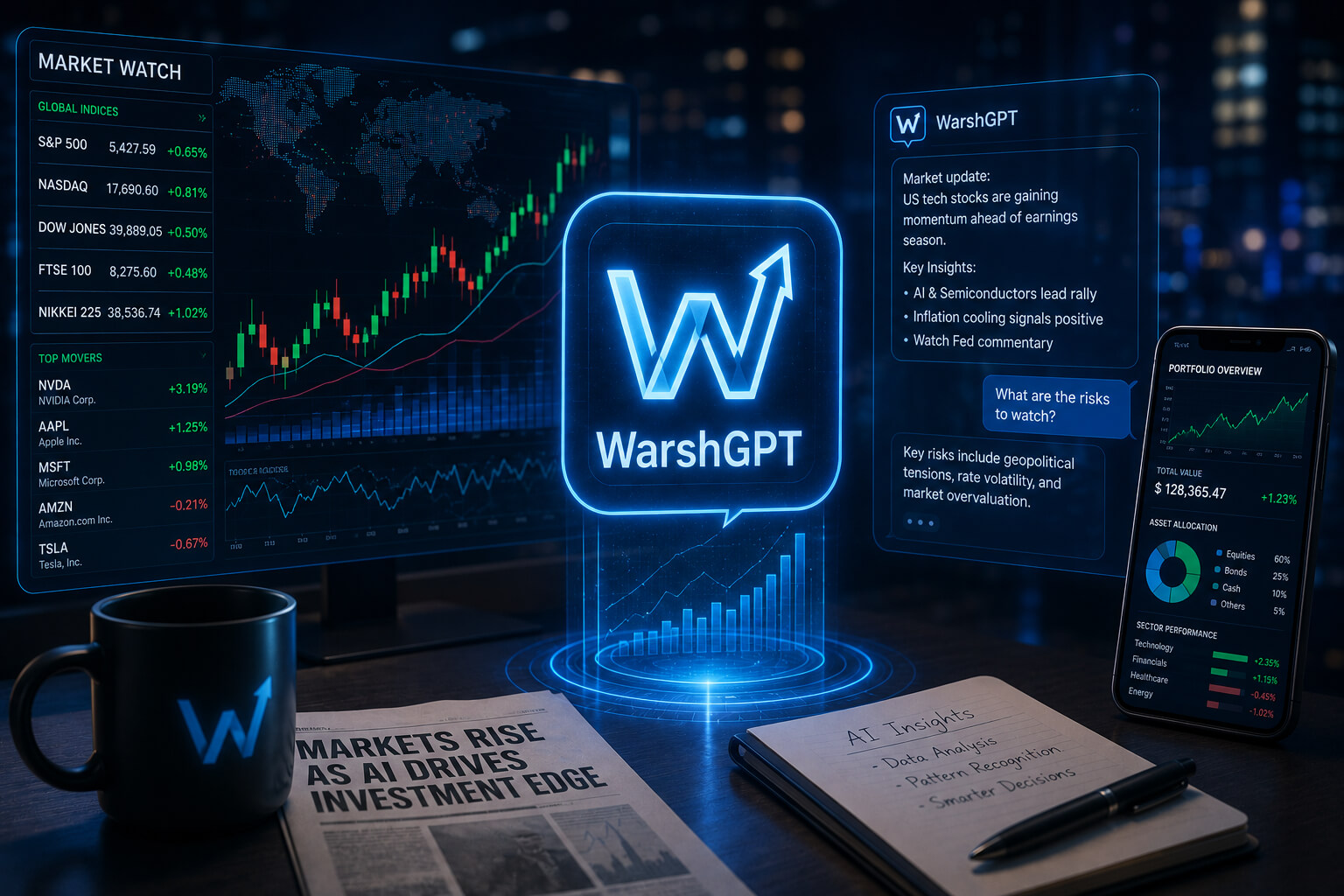
WarshGPT has landed in the market conversation, and not in the quiet way.
According to Blockchain.News, the term appeared in CNBC’s Morning Squawk discussion as investors watched how AI could affect financial media, market analysis, and monetization strategies. The update points to a bigger shift already happening across Wall Street: AI is no longer just helping people write summaries. It is starting to shape how investors digest market signals before the trading day even gets moving.
That matters because financial news is fast. Sometimes too fast. Markets react to inflation data, central bank comments, earnings, oil prices, tech stocks, political risk, and random headlines that suddenly become important. A tool that can compress all of that into something useful has obvious value.
Also obvious: it can go wrong.
WarshGPT Enters the Morning Market Conversation
WarshGPT drew attention after CNBC’s Morning Squawk highlighted it while investors weighed AI market impacts and possible monetization paths, according to Blockchain.News.
The name itself sounds almost playful. But the idea behind it is serious. Market watchers want AI systems that can scan information, summarize what matters, and connect events faster than a human team can do manually.
Not replace the analyst completely. That is the lazy version of the story.
The more realistic version is simpler: AI takes the boring volume work. Humans still decide what the information means.
AI Is Changing Financial Media From the Inside
Financial media has always been built around speed. The first outlet to explain a market-moving event gets attention. The first analyst to frame the risk gets quoted. The first dashboard to catch the pattern gets used.
AI changes that race.
With tools like WarshGPT entering the discussion, business news platforms and market teams are looking at AI as a way to process real-time data streams, summarize global developments, and deliver faster morning briefings.
That could help traders, investors, executives, and media teams. It could also create a flood of polished but shallow analysis if companies chase speed without judgment.
Fast is useful. Fast and wrong is expensive.
Why Investors Are Watching AI Market Tools
The market opportunity is not hard to understand.
Investment firms, trading desks, financial media companies, and research teams all deal with too much information. AI-powered dashboards could turn that overload into custom alerts, scenario models, and quick market summaries.
Blockchain.News noted that monetization strategies may center on subscription-based AI dashboards, customized alerts, and scenario simulations for professional users.
That sounds like the next paid layer of financial information. Not just “here is the news.” More like “here is what this news might mean for your portfolio, sector, or trading view.”
For enterprise customers, that is where the money could be.
The Risk Is Trust, Not Just Technology
AI market analysis has one problem it cannot escape: trust.
If an AI tool summarizes market data, users need to know where the information came from. If it generates an outlook, they need to understand whether it is based on facts, assumptions, historical patterns, or weak signals dressed up as confidence.
Financial content is not casual content. A bad answer can influence real money decisions.
That is why transparency matters. AI-generated market commentary needs human oversight, clear sourcing, compliance checks, and regular audits. Otherwise, the same tool that speeds up analysis can also speed up misinformation.
The technology is impressive. The governance around it matters just as much.
AI Won’t Remove Analysts, But It Will Change Their Work
The better argument is not that AI will replace financial analysts.
It will probably make weak analysis easier to spot.
If AI can summarize headlines, extract numbers, compare market moves, and build basic scenarios, human analysts will need to do more than repeat the obvious. Their value moves toward judgment, interpretation, skepticism, and context.
That is a harder job. Also a more useful one.
WarshGPT fits into that larger transition. It represents a market where AI handles more of the first draft, while humans are expected to sharpen the final call.
What WarshGPT Signals for Financial AI
WarshGPT may be one headline in one market update, but it points toward a wider trend.
AI tools are moving closer to the financial decision layer. They are not just writing reports after the fact. They are helping shape what people see before markets open, how they interpret risk, and which signals get attention first.
That could make financial media faster and more personalized.
It could also make markets noisier.
For now, the lesson is simple: AI is becoming part of the morning market routine. Investors may still want human judgment, but they increasingly expect AI speed.
WarshGPT is another sign that the two are starting to meet.