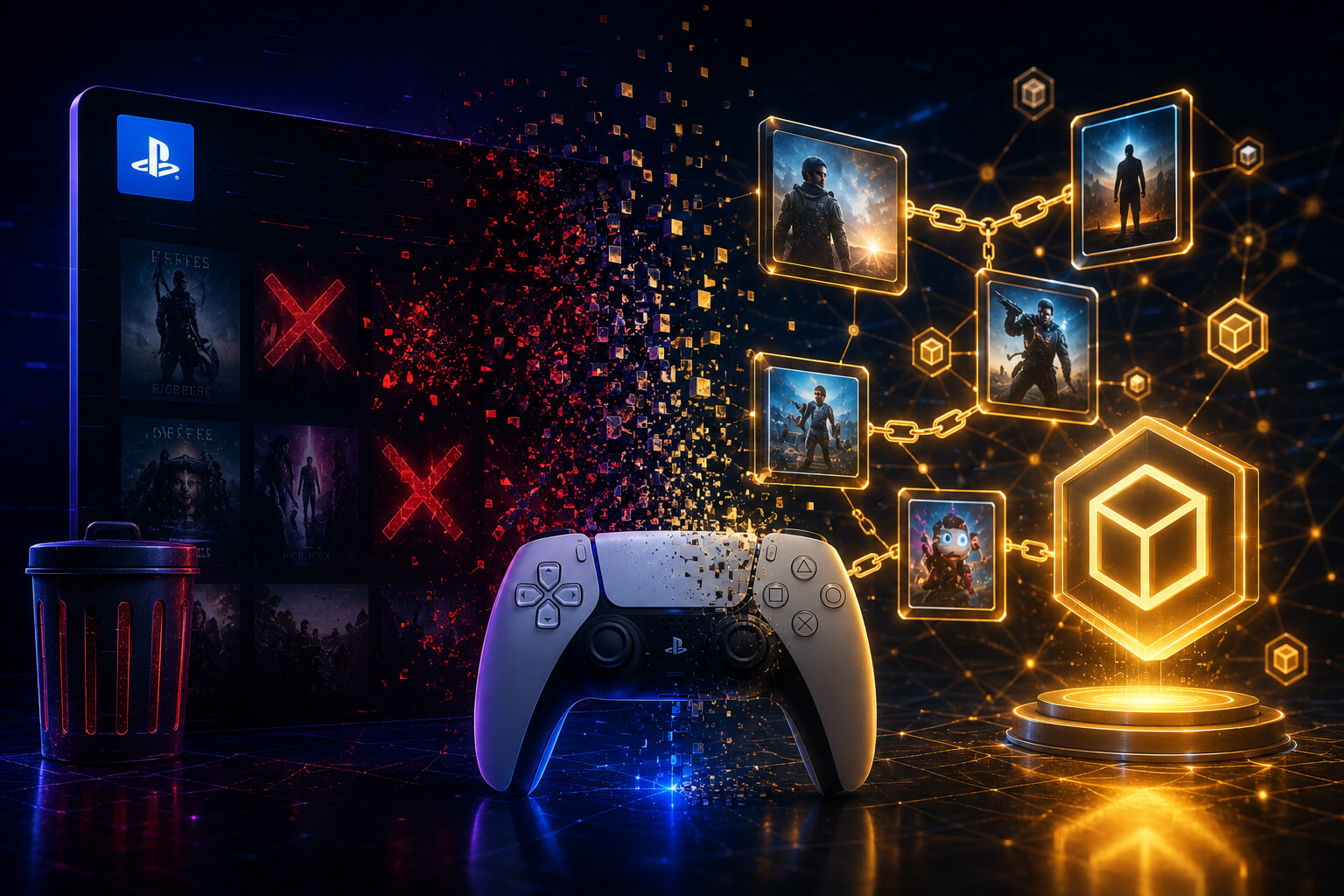
The debate over blockchain digital ownership is gaining new momentum after PlayStation confirmed that hundreds of previously purchased movies will be removed from user libraries due to licensing changes.
Sony Interactive Entertainment is set to remove 551 StudioCanal films from UK PlayStation Store accounts on September 1, 2026. The affected titles reportedly include well-known films such as Terminator 2: Judgment Day, Total Recall, Bridget Jones’s Diary, Pan’s Labyrinth, and Paddington.
For many users, the decision raises a difficult question: when consumers buy digital content, do they actually own it?
PlayStation Movie Removal Highlights Digital Ownership Problem
Digital marketplaces have changed how people buy movies, games, music, books, and other media. Instead of owning a physical copy, users often purchase access to content through an online platform.
However, the PlayStation movie removal shows that this access may depend on licensing agreements between platforms and content owners. When those agreements expire or change, consumers can lose access to media they already paid for.
This has become one of the biggest criticisms of the modern digital economy. A user may click “buy,” but in many cases, the transaction is closer to a long-term license than true ownership.
For blockchain supporters, this situation highlights why decentralized ownership systems are becoming more important.
Why Blockchain Digital Ownership Is Back in Focus
Blockchain technology offers a different model for digital ownership. Instead of relying only on a centralized platform to verify purchases, blockchain can create transparent, verifiable, and transferable ownership records.
In theory, blockchain-backed media ownership could allow users to prove that they purchased a digital item even if a platform changes its licensing terms. It could also support resale, transfer, or cross-platform access if media companies, marketplaces, and rights holders build compatible systems.
This is where NFTs and tokenized media rights enter the conversation. While NFTs became widely associated with digital art and collectibles, the broader idea behind them is ownership verification. A blockchain record can show who owns a specific digital asset or access right.
For movies, games, and music, this could create a future where digital purchases are not locked inside one company’s ecosystem.
Web3 Supporters See a Strong Use Case
The PlayStation case gives Web3 advocates another real-world example of why blockchain-based ownership could matter beyond speculation and trading.
If a user buys a movie, game, or album, blockchain could help create a permanent record of that purchase. Smart contracts could also define what the owner can do with the asset, such as watch it, lend it, transfer it, or resell it.
This does not mean blockchain automatically solves every media licensing issue. Studios still control distribution rights, copyright rules still apply, and streaming access still depends on infrastructure. However, blockchain could make ownership terms clearer and more transparent.
At the very least, it could reduce confusion between “buying access” and “owning an asset.”
The Challenge for Blockchain-Based Media Ownership
Despite its potential, blockchain digital ownership still faces major challenges.
Media companies would need to support blockchain-based licenses. Platforms would need to recognize those licenses. Consumers would need easy-to-use wallets and interfaces. Regulators would also need to clarify how tokenized media rights should work.
There is also the question of content storage. Owning a blockchain token does not always mean owning the actual media file. If the video, game, or music file is still hosted on a centralized server, access can still be interrupted.
This is why a complete digital ownership model may require both blockchain verification and decentralized storage solutions.
What This Means for Consumers
The removal of purchased PlayStation movies is a reminder that digital convenience can come with hidden risks. Users may enjoy instant access and cloud-based libraries, but that access can be limited by contracts they never see.
For consumers, the case may encourage more careful reading of digital purchase terms. It may also increase interest in physical media, DRM-free downloads, and blockchain-backed ownership models.
For the blockchain industry, the incident creates an opportunity to show practical value. Instead of focusing only on hype, blockchain companies can position digital ownership as a real solution to a growing consumer problem.
Blockchain Could Redefine the Meaning of “Buy”
The PlayStation movie deletion controversy shows that digital ownership remains unresolved. As more entertainment, gaming, and media purchases move online, consumers will continue asking what they truly own.
Blockchain digital ownership may not replace today’s media platforms overnight. But it offers a powerful alternative vision: one where users have verifiable rights, clearer ownership records, and more control over the digital products they purchase.
As the digital economy expands, the difference between access and ownership will become harder to ignore. For blockchain advocates, this may be one of the clearest use cases yet.