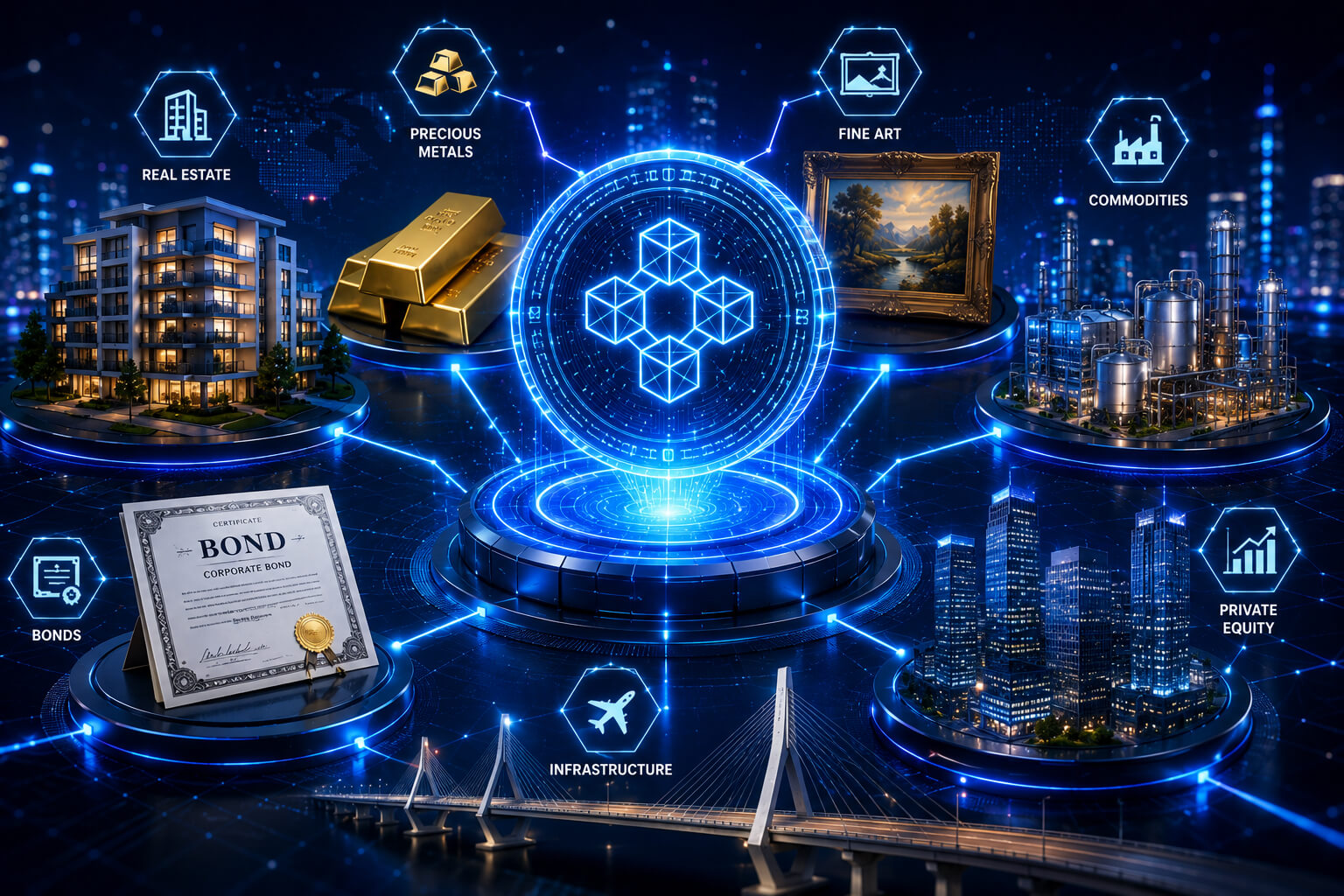
Real-world asset tokenization is becoming one of the most important use cases in blockchain. As the crypto industry moves beyond speculation, tokenization is showing how blockchain can connect digital finance with physical and traditional assets.
Real-world assets, often called RWAs, are assets that exist outside the blockchain but can be represented digitally on-chain. These may include real estate, government bonds, private credit, commodities, fine art, luxury collectibles, stocks, and other financial instruments.
Through real-world asset tokenization, ownership rights or economic interests in these assets are converted into digital tokens recorded on a blockchain. These tokens can then be transferred, traded, or used in decentralized finance applications, depending on the asset structure and applicable regulations.
What Is Real-World Asset Tokenization?
Real-world asset tokenization is the process of creating blockchain-based tokens that represent ownership, value, or rights linked to a physical or traditional asset.
For example, a commercial building worth millions of dollars can be divided into thousands of digital tokens. Each token may represent a fractional share of ownership or a claim on future income, such as rental payments. Instead of requiring one investor to buy the entire property, tokenization allows multiple investors to own smaller portions of the asset.
The same idea can apply to bonds, gold, artwork, private equity, invoices, carbon credits, or other assets that are usually difficult to access or trade efficiently.
In simple terms, tokenization turns real-world value into programmable digital assets.
How Real-World Asset Tokenization Works
The process of tokenizing real-world assets usually involves several steps.
First, the asset must be identified and legally structured. This means confirming ownership, valuation, rights, and compliance requirements. For physical assets such as property or art, legal documents must clearly connect the real asset to the digital token.
Second, the asset is represented on a blockchain through a smart contract. A smart contract is a blockchain-based program that can define how tokens are created, transferred, redeemed, or distributed.
Third, tokens are issued to investors or users. These tokens may represent ownership, revenue rights, debt claims, or access rights, depending on the structure of the project.
Finally, the tokens may be traded, held, or used in blockchain-based financial applications. In some cases, investors may also receive automated payments through smart contracts.
Examples of Real-World Assets That Can Be Tokenized
Real-world asset tokenization can be applied across different industries.
Real Estate
Real estate is one of the most common examples of RWA tokenization. Large properties can be divided into smaller digital shares, allowing investors to gain exposure to property markets without buying an entire building.
Tokenized real estate may also make property investment more liquid by allowing ownership shares to be traded on secondary markets.
Bonds and Treasuries
Tokenized government bonds and Treasury-backed products are gaining attention from financial institutions. Blockchain can make bond issuance, settlement, and recordkeeping faster and more transparent.
Instead of waiting days for settlement through traditional systems, tokenized assets can potentially settle much faster through blockchain networks.
Commodities
Gold, oil, and other commodities can also be tokenized. A token may represent a claim to a specific amount of a commodity stored by a custodian.
This can make commodity exposure easier to access for investors who do not want to handle physical storage or complex brokerage arrangements.
Fine Art and Collectibles
Fine art, rare wine, watches, classic cars, and other luxury assets can be divided into digital ownership shares. This gives more investors access to markets that were previously limited to wealthy collectors.
Private Credit and Invoices
Businesses can tokenize debt, loans, or receivables. This may create new ways for companies to raise capital while allowing investors to access private credit opportunities.
Why Real-World Asset Tokenization Matters
Real-world asset tokenization matters because it can modernize how assets are owned, traded, and managed.
Traditional financial systems often rely on intermediaries, paperwork, manual verification, and slow settlement cycles. Blockchain can reduce some of these inefficiencies by providing a transparent and programmable ownership record.
Tokenization may also make markets more accessible. Instead of requiring large capital to participate in high-value assets, investors may be able to buy fractional shares through tokens.
For institutions, tokenization offers a path toward faster settlement, improved transparency, automated compliance, and more efficient asset servicing.
Key Benefits of Real-World Asset Tokenization
1. Fractional Ownership
Tokenization allows expensive assets to be divided into smaller units. This can make real estate, fine art, bonds, and other high-value assets more accessible to a wider range of investors.
2. Improved Liquidity
Many real-world assets are difficult to sell quickly. Tokenized assets may be traded on digital marketplaces, creating the possibility of more liquid secondary markets.
3. Faster Settlement
Traditional finance can take days to settle transactions. Blockchain-based systems can support faster transfers and near real-time settlement, depending on the network and regulatory structure.
4. Lower Costs
By reducing the need for intermediaries and manual processes, tokenization may lower administrative, settlement, and recordkeeping costs.
5. Transparency
Blockchain records can provide a clearer history of ownership and transactions. This may help improve trust, auditing, and compliance.
6. Programmable Assets
Smart contracts can automate payments, ownership transfers, voting rights, and other asset-related actions.
Challenges Facing RWA Tokenization
Despite its potential, real-world asset tokenization still faces major challenges.
Regulation
Tokenized assets often involve securities laws, property rights, investor protections, and cross-border compliance. Clear regulation is essential before tokenization can reach mass adoption.
Legal Ownership
A token must be legally connected to the real asset it represents. Without strong legal structures, token holders may not have enforceable rights.
Custody and Verification
Physical assets need trusted custody, valuation, and verification. Blockchain can record ownership, but it cannot physically protect a building, painting, or gold bar.
Scalability
Some blockchains still face limitations around speed, fees, and network capacity. Large-scale tokenization will require reliable infrastructure.
Investor Education
Many users still find blockchain wallets, private keys, and decentralized applications difficult to understand. Better user experience will be needed for mainstream adoption.
Are Tokenized Real-World Assets the Future of Finance?
Real-world asset tokenization is still developing, but it is already attracting attention from banks, asset managers, blockchain companies, and financial technology firms.
The appeal is clear: tokenization can make assets more accessible, markets more efficient, and financial infrastructure more programmable. It also creates a bridge between traditional finance and decentralized finance.
However, tokenization will not remove all risks. A tokenized asset still depends on the quality of the underlying asset, the strength of its legal structure, the reliability of its custodian, and the security of its blockchain system.
For tokenization to become mainstream, the industry must solve legal, technical, regulatory, and operational challenges.
Conclusion
Real-world asset tokenization is one of the most promising blockchain applications because it connects digital assets with real economic value. By bringing assets such as real estate, bonds, commodities, and fine art on-chain, tokenization could reshape how people invest, trade, and manage ownership.
The technology offers major benefits, including fractional ownership, faster settlement, lower costs, improved transparency, and broader market access. At the same time, regulation, custody, legal enforceability, and investor protection remain important concerns.
As blockchain infrastructure matures, real-world asset tokenization could become a major part of the future financial system. For investors, institutions, and blockchain builders, RWA tokenization is a trend worth watching closely.