
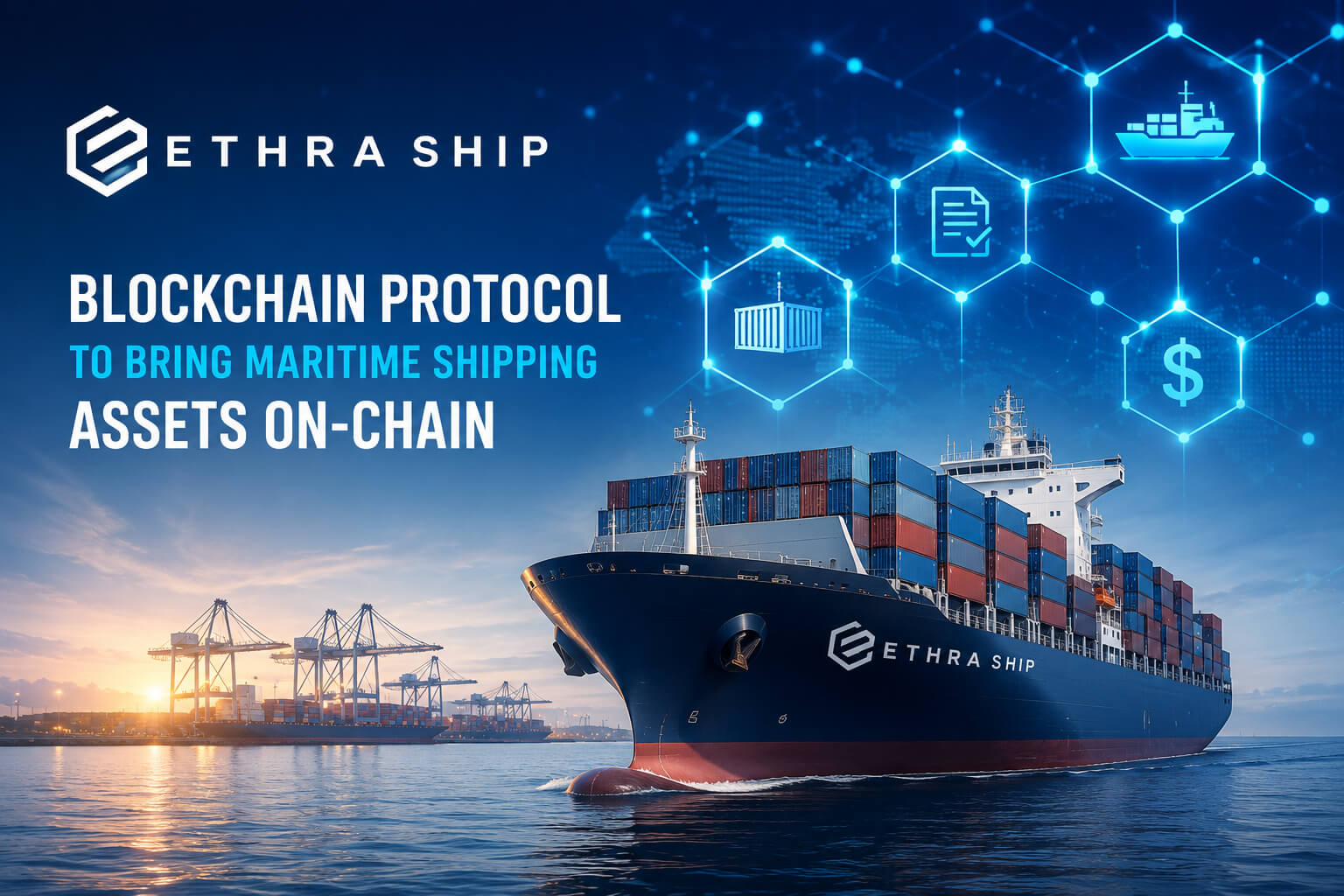
Ethra Ship has launched a new blockchain-based protocol designed to bring maritime shipping assets into the real-world asset tokenization market, opening access to a sector traditionally dominated by institutional investors.
The Ethra Ship blockchain protocol introduces a two-layer ecosystem that connects crypto users and eligible institutional investors with operating dry bulk shipping assets. The launch marks another sign of growing interest in tokenized real-world assets as blockchain technology expands beyond cryptocurrencies and into physical industries.
According to the company, the protocol is backed by Ethra Invest, which has been acquiring, managing and commercially operating vessels since 2021. This gives the platform an existing maritime business foundation rather than relying only on future asset acquisition plans.
Ethra Ship Blockchain Protocol Targets Maritime Capital Markets
The maritime shipping industry is one of the world’s most important trade sectors, but direct participation in shipping assets has often required significant capital, industry access and specialized management expertise.
Ethra Ship aims to change this through blockchain infrastructure. Its protocol is designed to provide greater access, transparency and structured participation in operating vessel portfolios.
Individual shipping vessels can cost tens of millions of dollars, placing them beyond the reach of most individual investors. Through tokenization and structured investment layers, Ethra Ship is positioning maritime assets as part of the growing real-world asset economy.
How the Ethra Ship Protocol Works
The Ethra Ship blockchain protocol uses a two-tier structure.
The first layer centers on the $SHIP token, which serves as the protocol’s utility and governance token. Holders are expected to gain access to staking features, protocol participation and fleet-related data through the company’s Fleet Visibility Dashboard.
The second layer is a regulated real-world asset investment tier. This layer is designed for eligible investors who complete KYC and AML checks. Participants may gain fractional exposure to Special Purpose Vehicles linked to operating dry bulk vessels.
Through this structure, Ethra Ship separates public blockchain participation from regulated asset exposure. This approach allows the protocol to serve both Web3 users and traditional investors while maintaining compliance requirements for real-world asset investment.
Bringing Real Vessel Operations to Blockchain
Ethra Ship says its protocol is built on top of an existing maritime operation, not just a token concept. Ethra Invest has reportedly operated dry bulk vessels for several years and generated Time Charter Equivalent revenue through commercial vessel activity.
This operating history is central to the company’s positioning. Many tokenization projects first launch digital assets and later seek real-world backing. Ethra Ship says it is taking the opposite approach by building blockchain infrastructure around an already active shipping business.
The company’s leadership has emphasized that tokenization works best when a real business supports the digital asset model. By combining vessel operations, charter revenue and maritime data, Ethra Ship wants to create a more grounded model for maritime real-world assets.
Maritime Shipping Enters the RWA Tokenization Market
The launch comes as tokenized real-world assets continue to grow across the blockchain industry. Tokenization has already gained traction in areas such as U.S. Treasuries, private credit, real estate, money market funds and commodities.
Ethra Ship’s entry highlights how the RWA market is now moving into more specialized asset classes. Maritime shipping could become an important use case because vessels generate commercial revenue, operate in a global market and support essential trade routes.
If successful, the model could help make shipping investment more transparent and accessible while giving blockchain users exposure to an industry that has historically remained outside public digital markets.
Future Plans for Ethra Ship
Ethra Ship plans to expand the protocol in stages. Future development phases are expected to include broader staking functions, more data services, institutional participation tools and eventual tokenized vessel ownership.
The company said additional milestones will be announced through its official communication channels as the protocol develops.
Why It Matters
Ethra Ship’s launch shows how blockchain technology is being applied to real-world industries with existing cash flows and physical infrastructure. Rather than focusing only on digital-native assets, the protocol connects blockchain participation with maritime shipping, one of the core industries behind global trade.
For the wider blockchain sector, the project reflects the continued expansion of real-world asset tokenization. As more companies move physical and financial assets on-chain, sectors such as shipping, commodities and infrastructure may become increasingly important parts of the Web3 economy.
Ethra Ship’s blockchain protocol could help define how maritime assets are structured, accessed and monitored in the next stage of tokenized finance.