
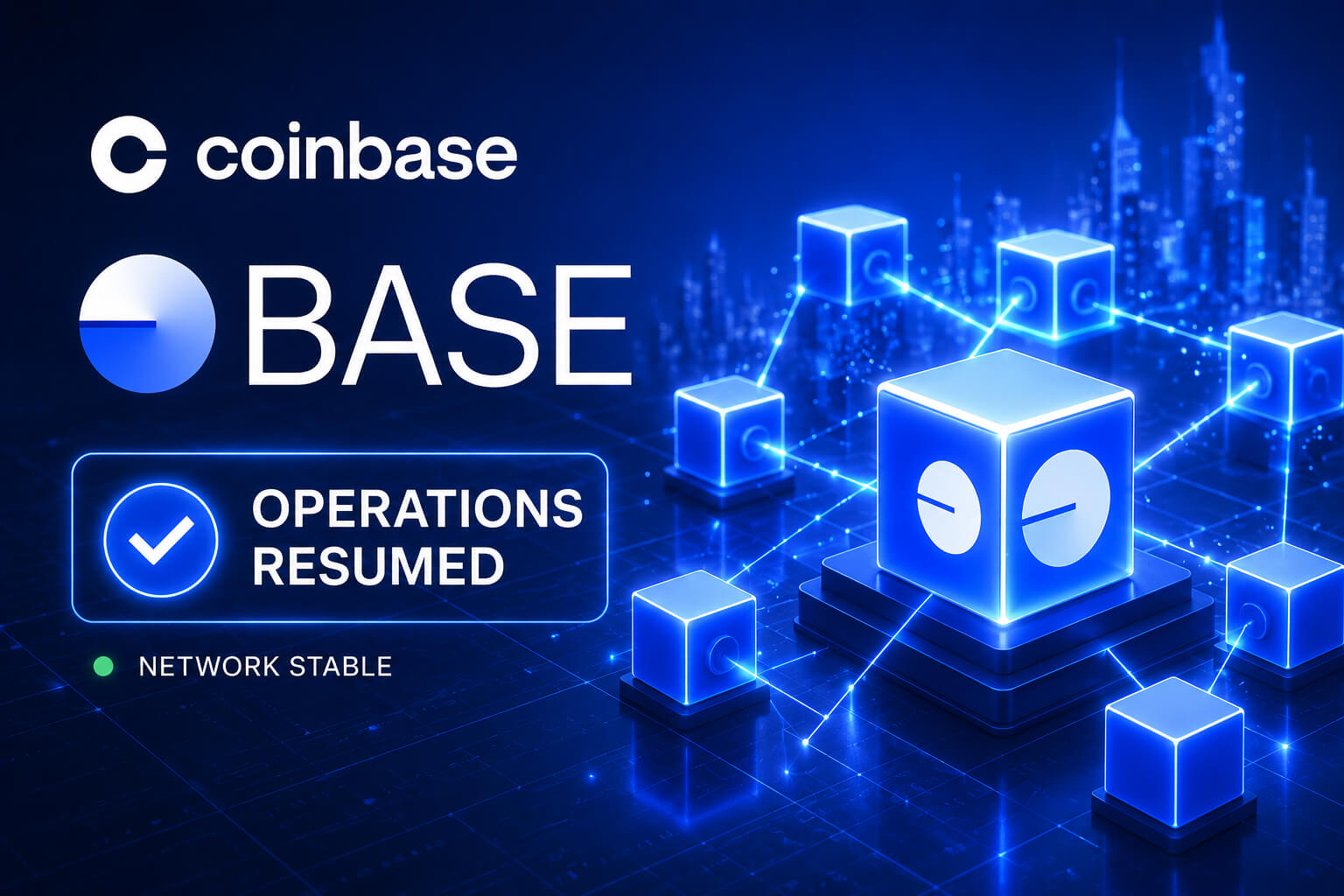
Coinbase’s Ethereum layer-2 network, Base, resumed operations after a roughly two-hour outage disrupted block production and temporarily stopped transaction processing across the network.
The incident affected one of the most widely watched Ethereum scaling networks, raising fresh questions about reliability, decentralization, and infrastructure resilience among layer-2 blockchains.
According to updates from the Base team, the network experienced an issue linked to an invalid block. During the outage, block production became unhealthy, preventing the chain from processing transactions as expected. Base later confirmed that operations had resumed and that internal nodes were syncing correctly.
What Happened During the Base Blockchain Outage?
The Base blockchain outage temporarily interrupted normal network activity. When a blockchain stops producing blocks, users may experience delayed transactions, failed confirmations, or interruptions when interacting with decentralized applications.
Base first reported signs of trouble when mainnet block production became unhealthy. The team later identified a problem and began working on multiple fixes to restore the chain.
After the network resumed, Base advised ecosystem node operators to restart their nodes to help restore synchronization. The team also said it would continue monitoring network stability while investigating the exact root cause.
Why the Base Outage Matters
Base has quickly become one of Ethereum’s most important layer-2 networks. Layer-2 blockchains are designed to make Ethereum transactions faster and cheaper by processing activity off the main Ethereum network while still benefiting from Ethereum’s security model.
Because Base is backed by Coinbase, one of the largest crypto exchanges in the world, any disruption on the network attracts close attention from developers, investors, and users.
A two-hour outage may not permanently damage the network’s growth, but it highlights a key challenge for blockchain infrastructure: scaling networks must remain fast, affordable, and reliable even as activity increases.
Base Continues Investigation Into Invalid Block
The Base team has not yet confirmed whether the invalid block was caused by a software bug, a consensus issue, or another technical fault. For now, the network appears to be back online, but the investigation remains important for preventing similar incidents in the future.
Outages on major layer-2 networks can affect wallets, decentralized exchanges, NFT platforms, DeFi apps, and other blockchain services that rely on consistent block production.
Another Reminder of Layer-2 Network Risks
The latest Base blockchain outage follows a previous disruption in August 2025, showing that even major layer-2 networks can face unexpected technical problems.
As Ethereum scaling solutions continue to grow, reliability will remain one of the biggest factors separating leading networks from competitors. Users and developers increasingly expect layer-2 platforms to provide low fees, high throughput, and minimal downtime.
What Comes Next for Base?
Base is expected to provide further updates as its team continues reviewing the incident. Developers, node operators, and users will be watching closely for a full explanation of what caused the outage and what steps will be taken to strengthen the network.
For now, Base has resumed block production and transaction processing. However, the incident is a reminder that blockchain networks, even those backed by major companies, still face technical risks as they scale.
Key Takeaway
The Coinbase-backed Base blockchain is back online after a two-hour outage disrupted network activity. While operations have resumed, the incident underscores the importance of infrastructure stability for Ethereum layer-2 networks and the broader blockchain ecosystem.