
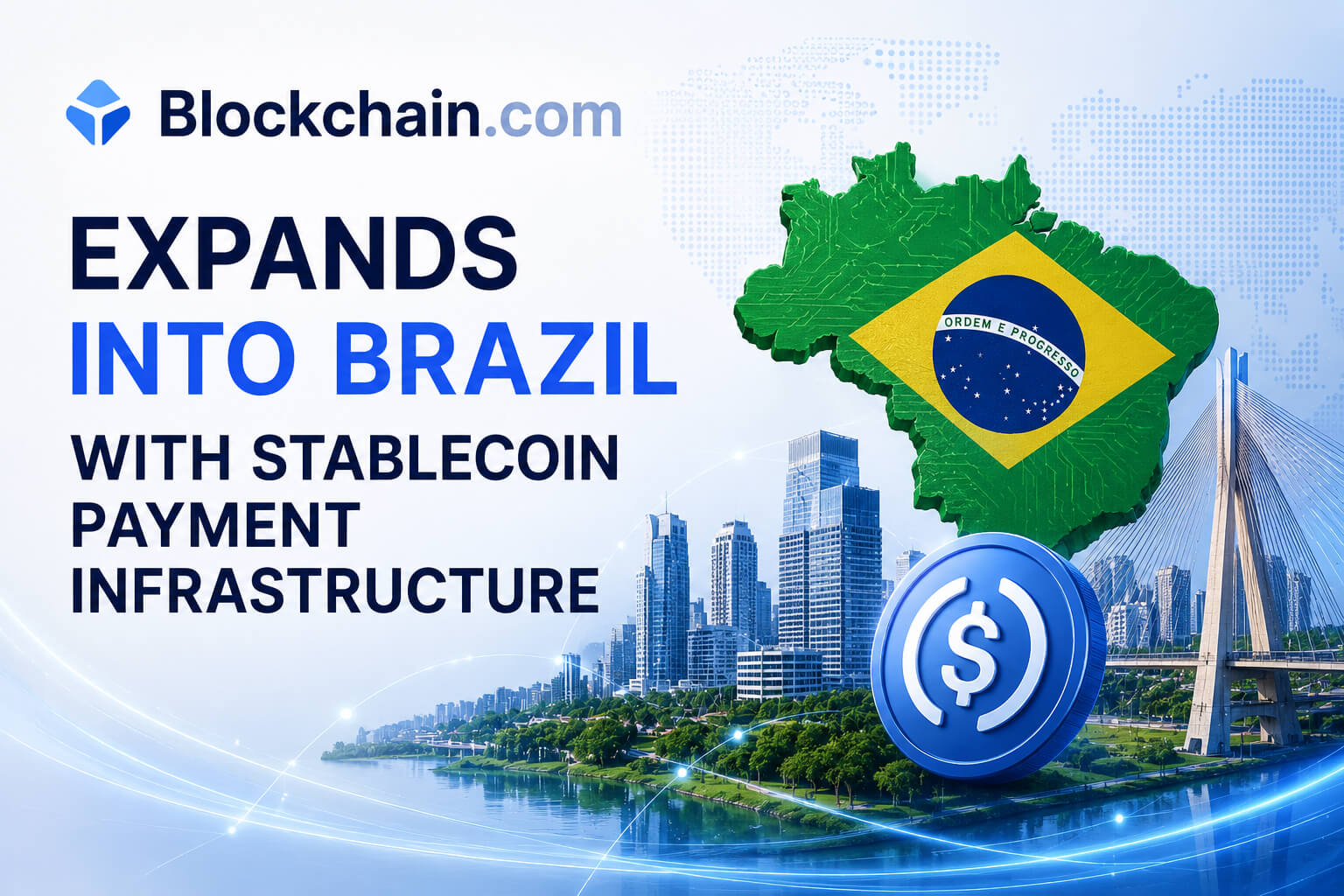
Blockchain.com is expanding its institutional operations in Brazil, launching a new payments infrastructure designed to support faster cross-border settlements, stablecoin-powered transfers, and global liquidity access for enterprises.
The move marks a major step in the company’s broader institutional strategy as demand grows for blockchain-based alternatives to traditional international payment systems. With Brazil standing as Latin America’s largest economy, Blockchain.com is positioning the country as a key market for enterprise-grade digital asset payment rails.
Blockchain.com Targets Institutional Payments in Brazil
The new Brazil-focused infrastructure is built for businesses that need to move capital across borders more efficiently. According to Blockchain.com, the solution is designed to help corporate clients manage international payments with fewer delays, lower operational friction, and improved transparency compared with traditional banking networks.
The company said the platform will support cross-border liquidity and settlement for enterprises handling treasury flows, supplier payments, payroll, and international commerce.
A key part of the offering is the use of stablecoins, including USDC and USDT, to route and settle payments. The system is designed to automatically select efficient payment rails based on the origin and destination of each transaction.
Stablecoins Gain Ground in Cross-Border Payments
Stablecoins are increasingly being used by institutions as a faster and more programmable way to transfer value internationally. For companies operating across Latin America, access to U.S. dollars and reliable settlement infrastructure remains a major challenge.
Traditional cross-border payments can involve high fees, capital restrictions, and slow processing times. Blockchain.com’s new Brazil infrastructure aims to address those pain points by combining traditional banking connectivity with digital asset settlement rails.
The company said it is working with U.S. banks to support USD settlement and international payment routing, giving corporate clients access to both fiat and blockchain-based payment infrastructure.
Fabrizio Spada to Lead Brazil Expansion
Blockchain.com has appointed financial payments veteran Fabrizio Spada to lead the company’s Brazil expansion and trading operations across Latin America.
Spada said businesses are increasingly seeking the speed and efficiency of digital assets without the complexity often associated with crypto. The goal, he added, is to provide compliant, secure, and scalable infrastructure for institutions moving capital globally.
Brazil Becomes a Strategic Blockchain Market
Brazil has become one of Latin America’s most important markets for digital payments, fintech growth, and blockchain adoption. The country’s strong institutional participation and evolving financial technology sector make it a key entry point for companies building crypto-powered payment infrastructure.
Blockchain.com’s expansion into Brazil comes as more corporations explore stablecoins for treasury management, international settlements, and vendor payments.
By offering near real-time settlement and improved transaction visibility, Blockchain.com aims to help enterprises reduce reliance on legacy intermediaries while modernizing their cross-border payment operations.
Blockchain.com Plans Wider Latin America Expansion
Following its Brazil launch, Blockchain.com plans to expand its corporate footprint into additional Latin American markets. The company said it intends to bring similar cross-border liquidity and settlement capabilities to more enterprises across the region.
The Brazil expansion also builds on Blockchain.com’s broader institutional business, which serves hedge funds, market makers, corporations, and high-net-worth clients through services including brokerage, liquidity, custody, and market infrastructure.
Why This Matters for the Blockchain Industry
Blockchain.com’s Brazil expansion highlights the growing role of stablecoins in real-world financial infrastructure. While crypto is often associated with trading and investment, institutional payment systems are becoming one of the most practical use cases for blockchain technology.
For businesses in Latin America, stablecoin-based settlement could offer faster access to global liquidity, improved dollar connectivity, and more efficient treasury operations.
As enterprise adoption grows, Brazil could become a major hub for blockchain-powered financial services in the region.