
Key Takeaways
- SCRYPT positions itself as a full-stack infrastructure provider for institutional crypto, streamlining trading, custody, liquidity, and investment tools.
- The SCRYPT institutional crypto OS enables compliant access to decentralized finance, tackling regulatory uncertainty for institutions.
- By providing a unified platform, SCRYPT reduces operational complexity, improves capital efficiency, and accelerates institutional onboarding into digital assets.
- SCRYPT’s strategy reflects a shift toward integrated financial ecosystems, focusing on regulatory compliance and institutional-grade risk management.
- This approach could significantly reshape how traditional financial institutions engage with blockchain technology and drive the next wave of institutional adoption.
The concept of a SCRYPT institutional crypto OS is gaining attention as the Swiss-based firm positions itself as a unified gateway for institutions entering digital assets and DeFi markets.
What Is SCRYPT Building for Institutions
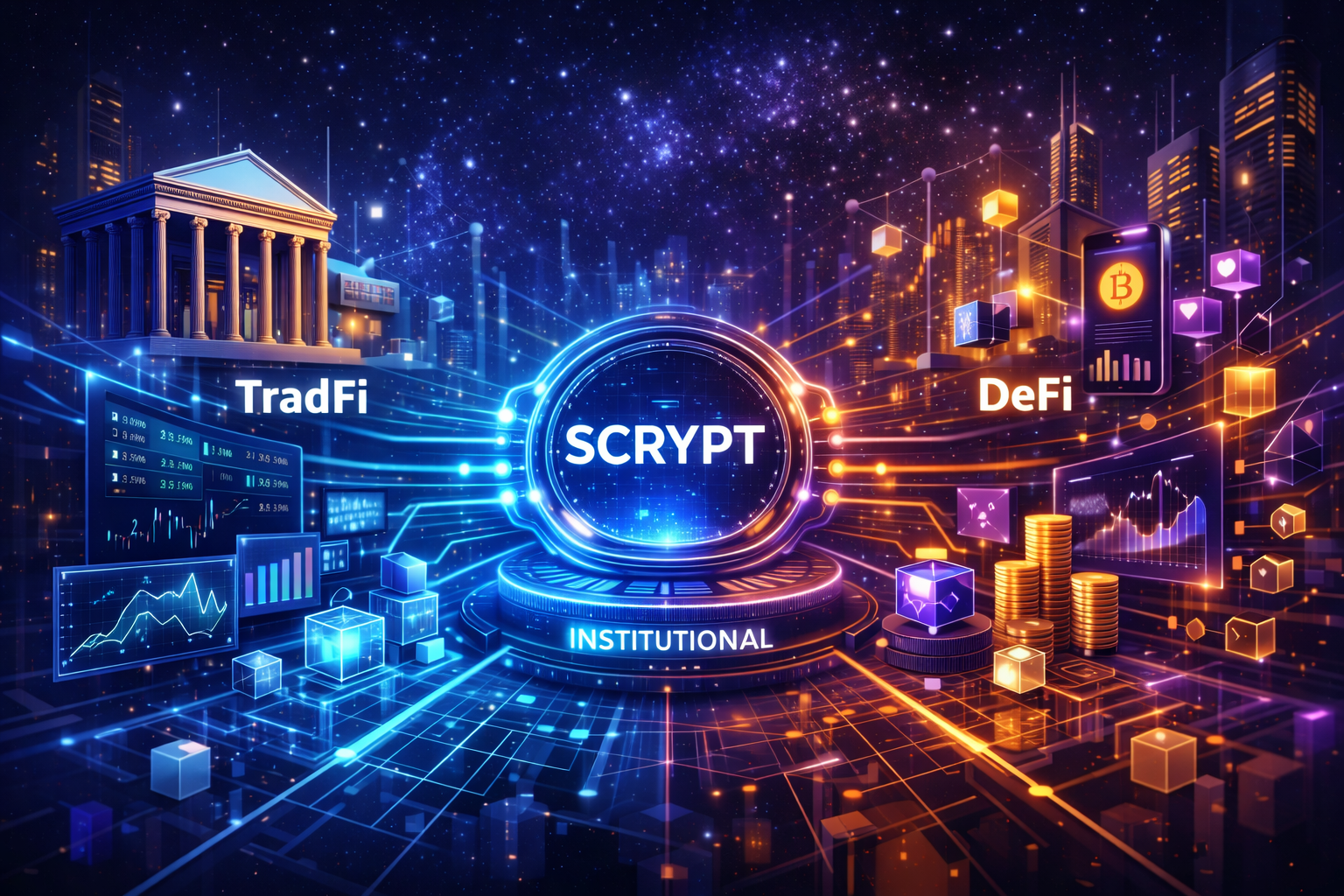
SCRYPT is positioning itself as a full-stack infrastructure provider for institutional crypto by combining trading, custody, liquidity, and investment tools into a single platform tailored for banks, asset managers, and hedge funds. Instead of offering fragmented services, the company is building what it describes as an operating system for institutional crypto, aiming to streamline workflows and reduce the complexity institutions face when entering the digital asset space. This integrated approach allows clients to manage exposure, execute trades, and access yield opportunities within one ecosystem.
SCRYPT Institutional Crypto OS and DeFi Access
A central component of the SCRYPT institutional crypto OS is enabling institutional access to decentralized finance in a compliant and structured way. Through collaborations such as its partnership with Gauntlet, SCRYPT provides access to risk-managed DeFi strategies within a regulated framework. This is particularly important because institutions have traditionally struggled with regulatory uncertainty, fragmented infrastructure, and the lack of standardized risk models in DeFi. By combining Swiss regulatory standards with institutional-grade custody and advanced risk modeling, the platform creates a safer and more transparent pathway for professional investors to participate in DeFi markets.
Why This Matters for Institutional Adoption
Institutional interest in crypto continues to rise, but infrastructure limitations remain a key barrier to entry. SCRYPT’s approach reflects a broader shift toward integrated platforms that mirror traditional financial systems, where institutions prefer unified, compliant, and scalable solutions over managing multiple service providers. By acting as an operating system layer for crypto, SCRYPT can help reduce operational complexity, improve capital efficiency, and accelerate institutional onboarding into digital assets. This could play a critical role as demand for structured and secure crypto exposure continues to grow.
The Bigger Picture for Crypto Infrastructure
SCRYPT’s strategy highlights the ongoing evolution of crypto infrastructure beyond simple exchanges and wallets into full-service financial ecosystems. The industry is increasingly focusing on regulatory compliance, integrated services, and institutional-grade risk management to attract larger players. If successful, SCRYPT’s model could reshape how traditional financial institutions interact with blockchain technology, making crypto a more seamless extension of existing financial systems rather than a separate and complex environment.
Conclusion:
The SCRYPT institutional crypto OS represents a significant step toward simplifying institutional participation in crypto and DeFi. By combining compliance, infrastructure, and risk management into one platform, SCRYPT could help drive the next wave of institutional adoption in digital finance.
👉 Source: https://crypto.news/inside-scrypts-bid-to-be-the-os-for-institutional-crypto/